Gran Canaria had people long before the Spanish conquest in the 15th century, and a lot of what they left is still visible: painted caves, cliffside granaries, whole cave villages in the mountains.
Las Palmas and the north
- Vegueta is the old quarter of Las Palmas, founded in 1478. Around the cathedral of Santa Ana are the Casa de Colón, a museum about Columbus and his stops on the island, and the Museo Canario, the place to learn about the island's first inhabitants.
- Teror is a small town of wooden balconies around the Basílica del Pino, home of the island's patron saint. The market fills the square on Sundays.
- The Cueva Pintada in Gáldar is a painted cave inside the remains of a pre-Hispanic village. Visits are guided only, so book ahead.
- Cenobio de Valerón, near Santa María de Guía, is a cliff face full of caves that the island's first inhabitants used to store grain.
The mountains
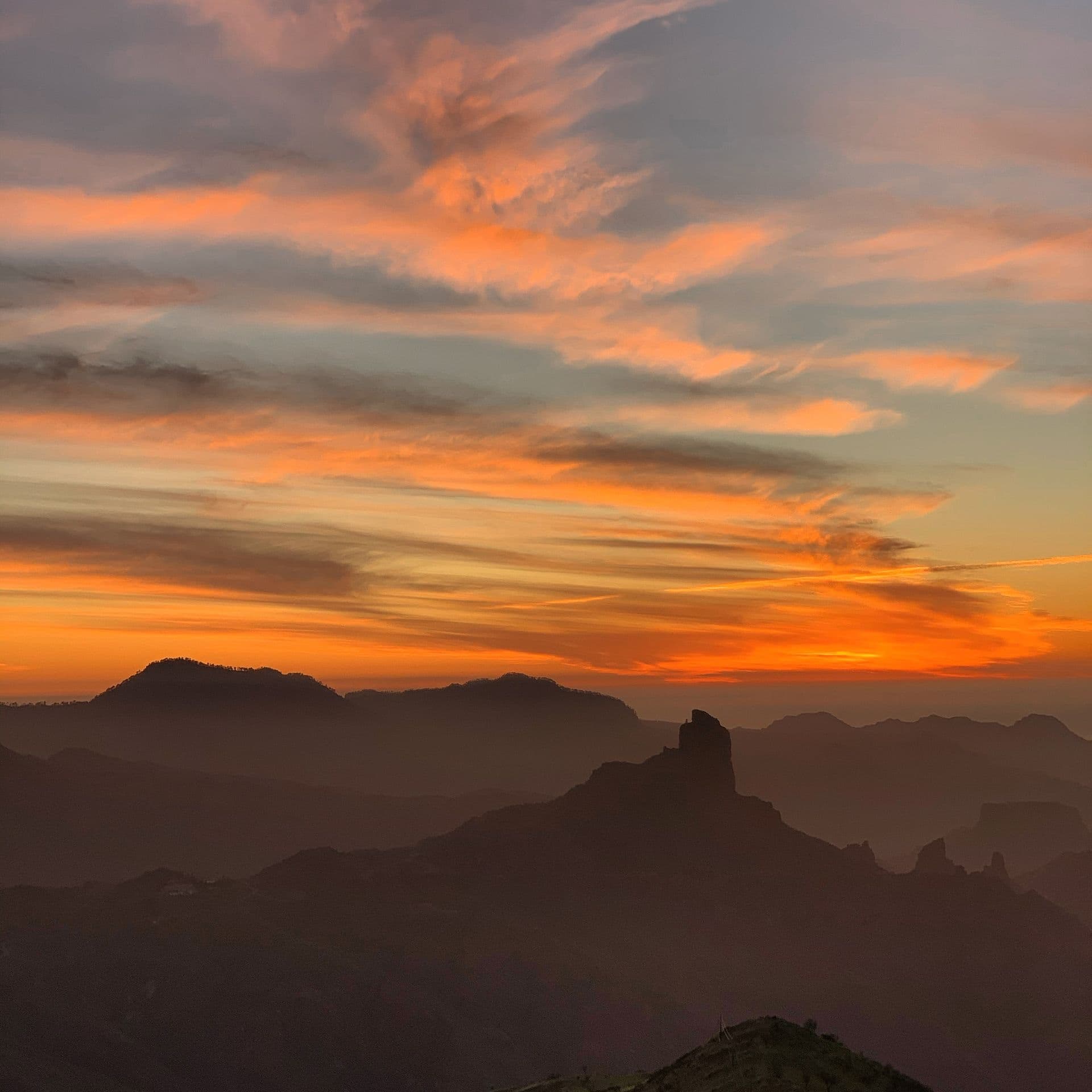
Risco Caído and the sacred mountains of Gran Canaria became a UNESCO World Heritage Site in 2019. The area covers cave settlements, granaries and places of worship in the centre of the island. At the interpretation centre in Artenara, a full-size copy of one of the caves shows how light enters it at the equinoxes and solstices.
Tours
Day trips from the south often combine several of these places in one day, with transport included. In Las Palmas there are walking and tuk-tuk tours of the old town. If you'd rather go on your own, most sites are easy to reach by car, and the Cueva Pintada is the one that must be booked in advance.