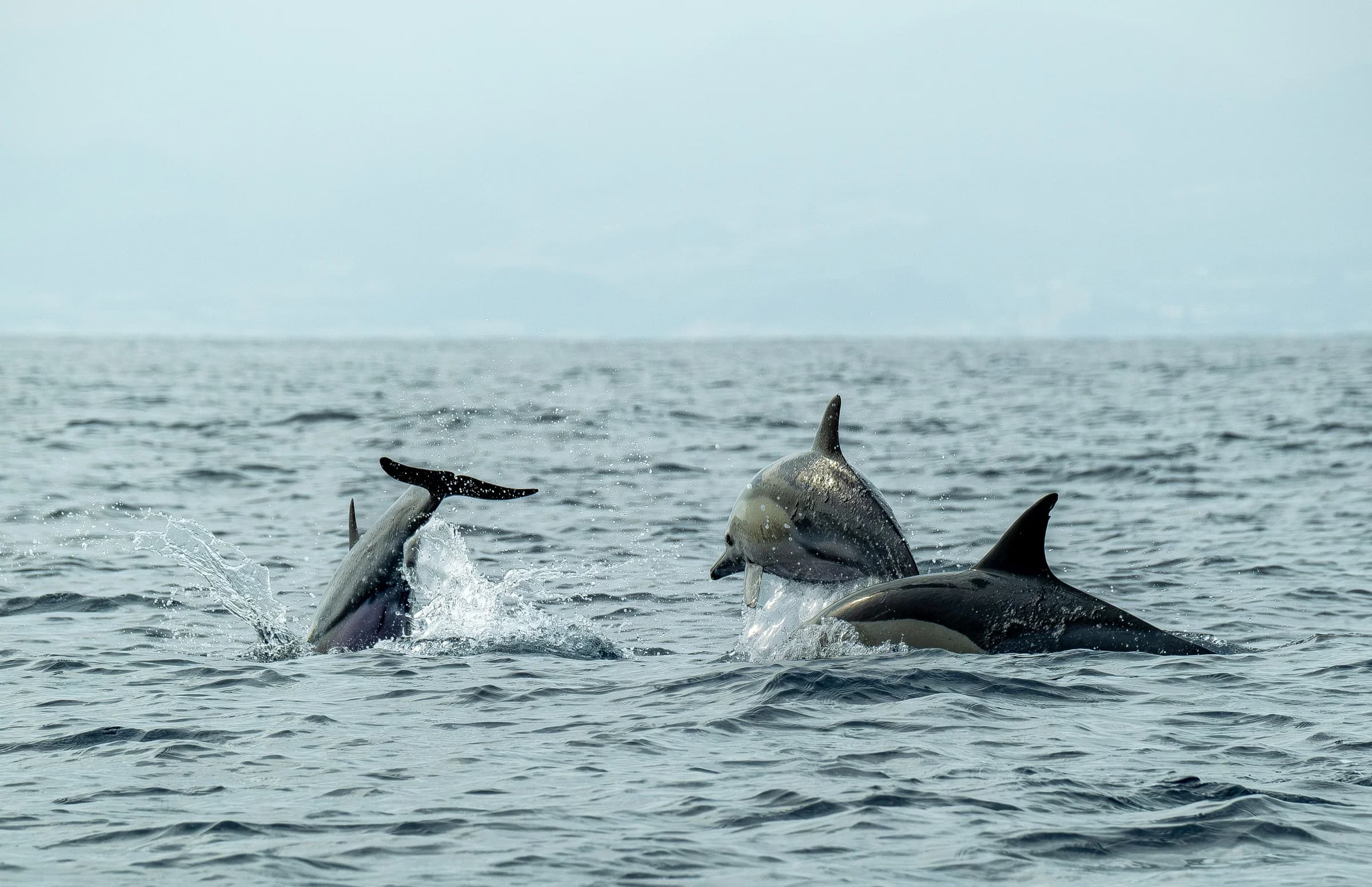
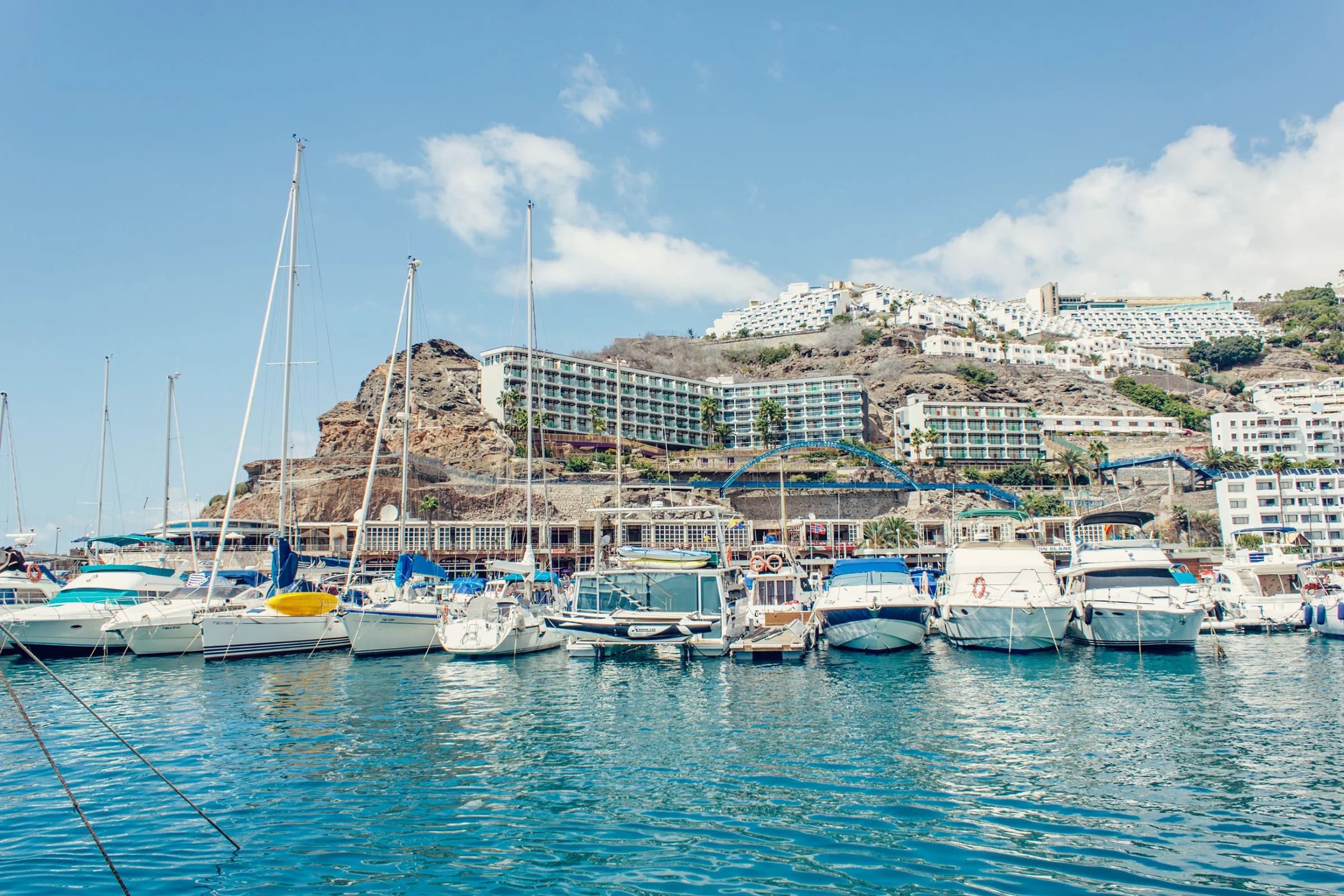
Gran Canaria rises steeply from the ocean floor, so the boats reach deep water soon after leaving the harbour. Most dolphin and whale trips leave from Puerto Rico or Puerto de Mogán and last two to three hours. Some catamaran cruises combine a search for dolphins with a swim stop and lunch. They're longer, and the wildlife is only part of the day.
What you might see
Dolphins are the usual sighting. Operators here report bottlenose, Atlantic spotted, common, striped and rough-toothed dolphins. Whales are much harder to predict. Pilot whales, beaked whales and sperm whales do turn up, but you can't count on seeing one on any given trip, and nobody can promise it. Some operators offer a second trip if you see nothing; if they do, the listing says so.
How the trips are regulated
Whale and dolphin watching in the Canary Islands is regulated by the regional government. Boats must keep at least 60 metres from the animals, approach slowly and leave if the animals show signs of stress. Swimming with them, touching or feeding them is not allowed. Boats licensed for whale watching carry the Barco Azul ("blue boat") badge, and it's worth looking for it in the listing.
Tips
- Polarised sunglasses make it much easier to spot fins on a bright sea.
- If you get seasick, take something before you board and stay on deck, looking at the horizon.